

How To Set A Metal Animal Trap
Trapping 101
In this section, Havahart® provides full general alive animal trapping data. You'll find an overview of how to trap animals, different trap types, and answers to your well-nigh mutual animal trapping questions!
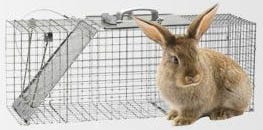
How to Trap a Wild Animal
This page is a great place to get familiar with how to utilize alive animal traps to solve your nuisance animal problem. For brute-specific trapping advice, select your animal on the Creature How-To Page »
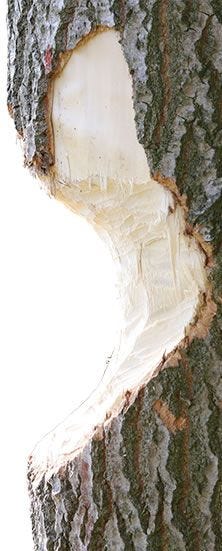
1 Empathize Your Problem
The get-go footstep is to identify the size and type of animal that is wreaking havoc on your property. You do this past taking a look at the impairment that is occurring - for case:
- If the tops of plants are existence eaten, it is most likely a deer-sized animal, which can attain these areas. Deer damage can be found every bit high as 6 feet upwards the plant.
- Rodents are known to dig tunnels and gnaw on barks and roots.
- Groundhogs are famous for chewing anything and everything to sharpen their teeth. Burrow holes and dirt mounds are major clues to the presence of a groundhog.
- Trashcans tipped over point to an aggressive mid-sized animal such every bit a raccoon.
- Rabbits will eat just about anything. You tin place rabbit damage by 45-degree angled cuts on the end of stems and leaves.
TIP: Well-nigh animals are nocturnal. Bank check at dusk to see if you tin spot the brute in areas where yous are noticing damage.
2 Select a Live Trap
A alive animal trap should be large plenty and so that the majority of the animate being's body can fit inside earlier reaching the trigger plate (not including the tail). Additionally, the trap should exist pocket-size enough equally to not allow for too much extra space for the animal to motility effectually (see full general guidelines below).
Live brute traps vary not merely in size, but as well in number of doors, ease of use, and other helpful features. To acquire more nigh the unlike traps available, read Trap Types »

3 Place Your Trap
Place your trap along your animal's travel path, outside its den or burrow, or in the area where you observe animal activity. For best results, position your trap:
- in a fairly tranquility area; far from people and pets
- close to a water source (unless indoors)
- on a flat, level surface
- forth a wall or debate line (if available, most animals will travel along this type of guide)
4 Select and Position Allurement
Apply nutrient to strategically lure your animal inside the trap.
- Select: All animals accept different tastes, so pick a nutrient that your animal will like. For help choosing a bait, select your target fauna from the Havahart® Animal How-To page.
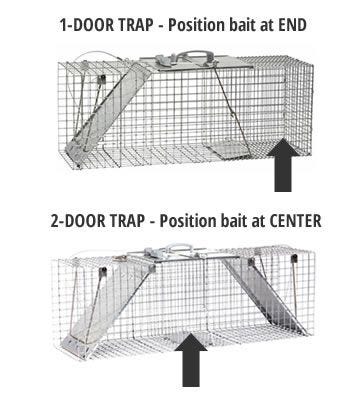
- Position: While selecting a allurement is important, positioning your bait is key to success. Place your bait in a way that will force the animal to step on the trigger plate (see diagrams to the correct).
To learn more nearly baiting a live trap, read How to Allurement »
5 Set Your Trap
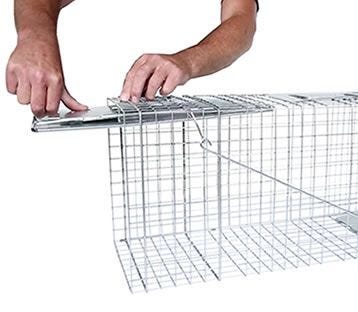
Advisedly set up the doors to the open position. Each trap sets differently, so make sure you lot follow your trap'southward unique instructions. (For help setting a Havahart® trap, visit the trap's product folio or the Havahart® YouTube Channel to see the footstep-past-step video instructions.)
This step may take some patience. Depending on your creature'due south activity and personality, it could take anywhere from a couple of hours to a few days to make a catch.

vi Check Your Trap Oft
The longer an animal is trapped, the longer it volition grow anxious, frightened, and hungry. Information technology is very important to cheque on your trap periodically to ensure your animate being does non remain inside the cage for an elongated period of time.
This step may have some patience. Depending on your fauna's activity and personality, information technology could take anywhere from a couple of hours to a few days to make a catch.
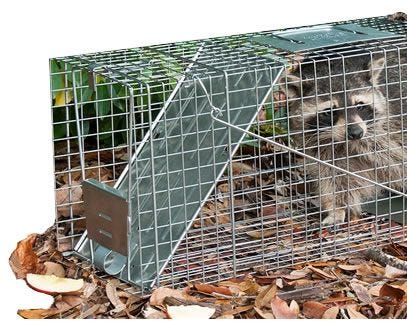
7 You've Caught an Animal!
- Be gentle and speak softly when budgeted and treatment the trap.
- Wear gloves and agree the trap away from your body to protect yourself from contact with the animal.
- Comprehend the trap with a blanket or cloth to keep the animal calm.
- If local laws permit, release the animal at least five miles away.
- Afterwards letting the animal get, disinfect the muzzle with a bleach solution to remove your scent and prevent the spreading of germs.
TIP: To disinfect your trap, create a solution of i function bleach to 9 parts of water. Apply the solution, and wait xx minutes before wiping downwardly the trap.
Good Tips
- For more animal-specific instructions and trapping tips, select your animal from the Havahart® Animal How-To Page.
- Many wild animals tin carry diseases, and then be certain to take the proper precautions when treatment a trap.
- Understanding your creature's habits and preferences will help y'all catch it sooner. For example, if your animal is nocturnal, you should set your trap at dusk and close it in the morning time to avoid catching unwanted critters. Havahart® offers all of the data yous need to learn nearly your target animal and so that y'all can more finer take command.
- Gloves are of import throughout all stages of animal trapping. Not but practise they protect yous from contact with an animal, but also they prevent you from transferring your scent onto the cage - which could otherwise make animals suspicious and wary of entering.
- Anchor your trap past placing a brick or weight on top of it and so an creature cannot knock it over to steal the bait. Alternatively, if you are using a very small trap, you may be able to necktie it down or stake it into the ground. Anchoring your trap will likewise preclude the trap from rattling and startling the brute when it enters, which is important for exceptionally skittish creatures.
- A shiny, new trap can produce a glare that might be off-putting to wary animals. Reduce this glare by camouflaging your trap with mud, sticks, leaves and anything else that naturally occurs in the area in which you set your trap. When camouflaging your trap, do non to let any materials make it the way of the trigger and close mechanism.
- When seeking a location for your trap, pay attending to the availability of nearby cover; some animals will not stray far from this kind of protection, while others prefer to exist out in the open up.
- Let your animal to go comfy with the trap before you set it upward for a catch. Necktie or prop open your trap door(south) so that information technology cannot trigger closed, and place some bait inside. Perhaps create a trail of allurement that leads to the trap as well. When you notice the bait inside the trap has been eaten, remove the ties or prop so that the side by side fourth dimension your creature enters, the doors will shut.
- Once you successfully trap an animal, keep it out past reducing attractants, repelling and excluding - all office of an constructive integrated control plan.
Source: https://www.havahart.com/expert-how-to-tips-to-trap-animals
0 Response to "How To Set A Metal Animal Trap"
Post a Comment